
English grammar can be surprisingly tricky when simple words combine in unusual ways. One question that often confuses learners and native speakers alike is whether to say “Which one is you?” or “Which one are you?” At first glance, both seem possible because the sentence contains both one and you. However, only one version sounds natural in standard English.
The confusion usually comes from misunderstanding which word controls the verb. Once you understand the hidden grammar behind the sentence, choosing the correct form becomes easy. This guide explains the rule, provides practical examples, highlights common mistakes, and shows how native speakers actually use these expressions.
Quick answer: Which one is correct and why
The correct phrase is:
✅ Which one are you?
The incorrect phrase is:
❌ Which one is you?
Why?
The verb must agree with you, not one.
Examples:
- Which one are you in the photo?
- Which one are you on the team?
- Which one are you in the group picture?
Because you always takes are, the correct form is Which one are you?
Quick Reference Table
| Phrase | Correct? |
| Which one are you? | ✅ Yes |
| Which one is you? | ❌ No |
| Which person are you? | ✅ Yes |
| Which member are you? | ✅ Yes |
Why this question confuses so many people
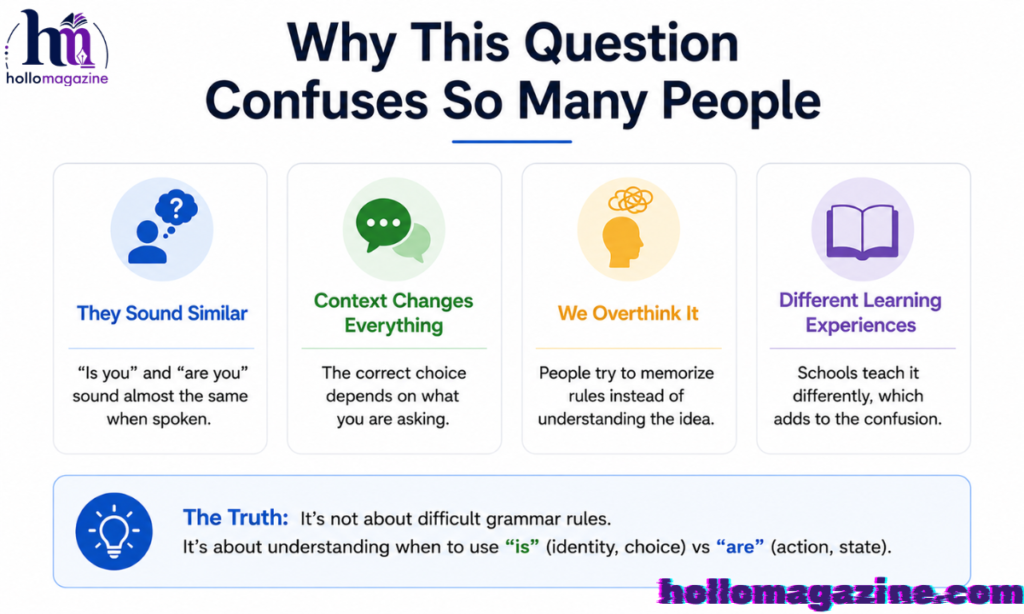
Many learners focus on the word one and assume it determines the verb.
For example:
- One is missing.
- One is available.
- One is selected.
Since one commonly uses is, people naturally assume:
- Which one is you?
However, that’s not how this sentence functions grammatically.
The actual focus is identifying you among multiple options.
The core rule you actually need
The secret is understanding the sentence’s hidden meaning.
When someone asks:
Which one are you?
They are really asking:
Which one represents you?
or
Which person among these is you?
The subject being identified is you, which requires the verb are.
Plain rule to memorize
Whenever the sentence identifies “you,” use “are.”
Examples:
- Which one are you?
- Which character are you?
- Which student are you?
- Which player are you?
Memorize this simple rule and you’ll avoid the mistake instantly.
Breaking down sentence structure: What’s really being asked
Consider a class photograph.
A teacher points to the picture and asks:
Which one are you?
The real meaning is:
- Which person is you?
- Which image represents you?
- Which individual in the picture are you?
English naturally chooses are because the sentence addresses you directly.
Sentence Breakdown
| Part | Function |
| Which | Question word |
| One | Choice among options |
| Are | Verb matching “you” |
| You | Person being identified |
This structure explains why native speakers instinctively choose are.
Subject-verb agreement table (clear and practical)
Correct subject-verb agreement is essential.
| Pronoun | Correct Verb |
| I | Am |
| You | Are |
| He | Is |
| She | Is |
| It | Is |
| We | Are |
| They | Are |
Because the sentence contains you, the correct verb is are.
Examples:
- You are here.
- You are next.
- Which one are you?
Is “Which One Is You?” ever acceptable?
In standard English, the answer is generally no.
Grammar guides, educational resources, and professional editors consider it incorrect.
Rare Exceptions
You may occasionally hear:
- Which one is you?
in:
- Children’s speech
- Regional dialects
- Informal conversations
- Non-native speaker communication
Even then, native speakers usually recognize it as nonstandard grammar.
Professional Writing
Always use:
✅ Which one are you?
Never use:
❌ Which one is you?
Why “Which One Are You?” sounds natural to Americans
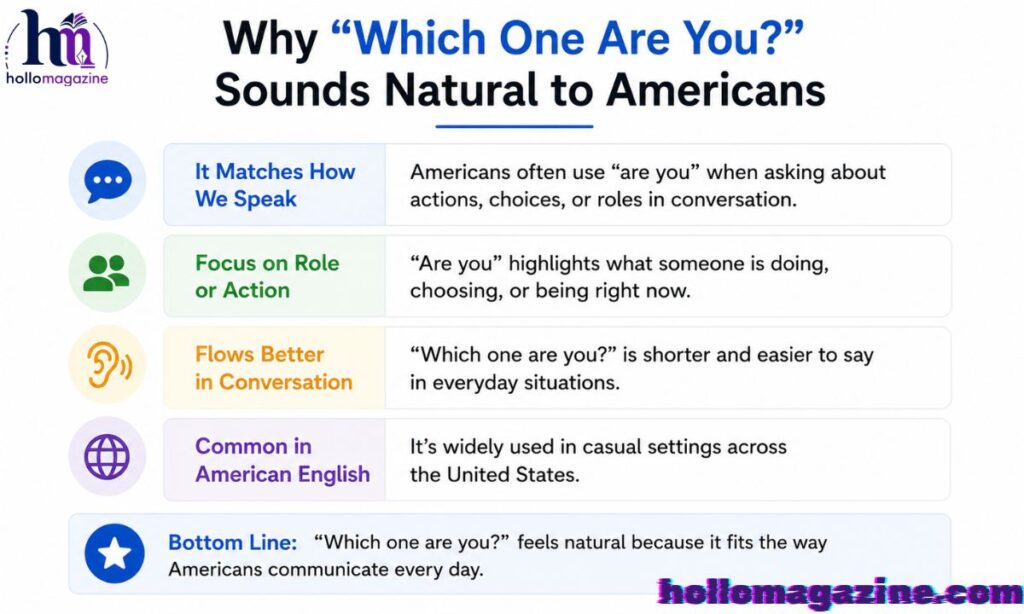
American English strongly follows the pronoun agreement rule.
Native speakers immediately recognize:
- You are
- They are
- We are
Because of lifelong exposure, phrases such as:
- Which one are you?
- Which person are you?
- Which player are you?
sound completely natural.
By contrast:
- Which one is you?
sounds grammatically off to most Americans.
Read This: Is It Correct to Say “Happiest Birthday”? A Complete Grammar and Usage Guide
Real-life examples you’ll actually hear
Here are common situations where the phrase appears naturally.
Photo Identification
- Which one are you in the graduation picture?
- Which one are you in the family photo?
Online Quizzes
- Which superhero are you?
- Which movie character are you?
- Which Disney character are you?
Sports Teams
- Which player are you?
- Which one are you on the roster?
Classroom Activities
- Which one are you in the presentation group?
- Which student are you?
These examples all use are.
Common mistakes and why they happen
Frequent mistakes
Writers often produce:
- Which one is you?
- Which character is you?
- Which person is you?
All are incorrect in standard English.
Why mistakes occur
Common reasons include:
- Overthinking the word “one”
- Misunderstanding subject-verb agreement
- Translating directly from another language
- Limited exposure to native usage
Fortunately, the correction is simple.
Quick decision chart: Choose “is” or “are” in two seconds
Use this shortcut.
| Question | Use |
| Is the sentence identifying you? | Are |
| Is the subject “he,” “she,” or “it”? | Is |
| Is the subject “you,” “we,” or “they”? | Are |
For this grammar question:
Which one are you?
wins every time.
How Americans actually use these phrases in daily speech
Teenagers and young adults
Young speakers regularly say:
- Which one are you?
- Which friend are you?
- Which character are you?
These forms dominate social media and casual conversation.
Professionals and formal settings
Professionals use the same structure.
Examples:
- Which department are you in?
- Which team are you on?
The rule remains unchanged.
Regional differences
Although accents and vocabulary vary across regions, Which one are you? remains the standard form throughout American English.
Editing and proofreading: Spotting and fixing errors
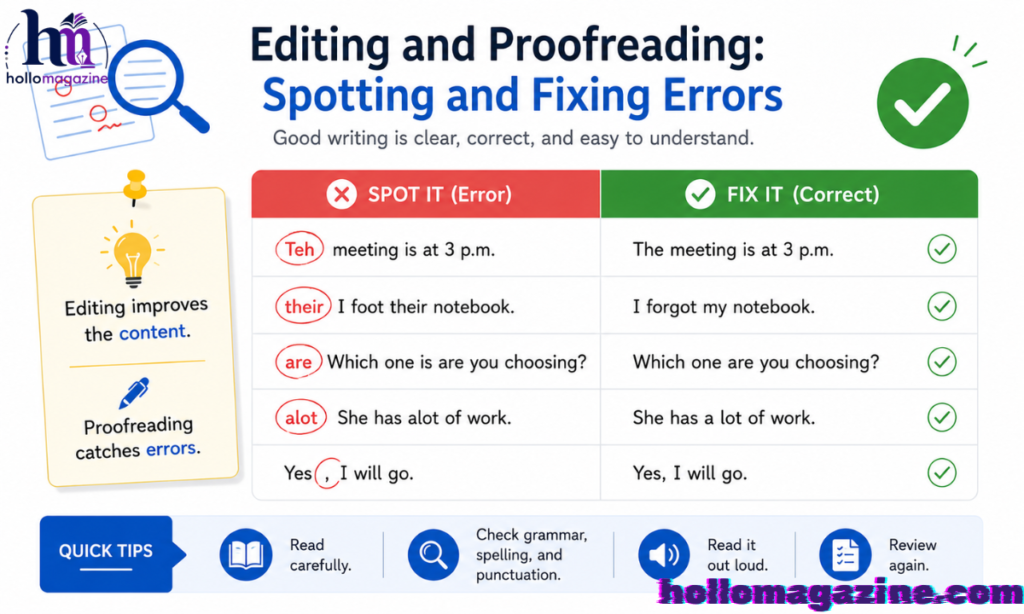
How to spot the error instantly
Look for:
- Is you
Whenever you see those words together, pause and check the sentence.
How to fix it without rewriting
Replace:
- Is you
with:
- Are you
Example:
❌ Which one is you?
✅ Which one are you?
Before-and-after examples
| Incorrect | Correct |
| Which one is you? | Which one are you? |
| Which character is you? | Which character are you? |
| Which student is you? | Which student are you? |
Practical alternatives that avoid the issue
If the sentence feels awkward, try alternatives.
Examples:
- Which person are you?
- Which one represents you?
- Which individual are you?
- Which character do you identify with?
- Which member are you?
These versions sound natural and clear.
When native speakers break the rules
Native speakers occasionally use incorrect grammar for:
- Humor
- Dialect representation
- Character dialogue
- Informal speech
Example:
- Which one is you, buddy?
This may appear in fiction or casual conversation but is not considered standard English.
Case study: Classroom confusion and teacher fix
Imagine a teacher showing a group photo.
A student asks:
❌ Which one is you?
The teacher responds:
✅ Which one are you?
The correction happens because you requires are, regardless of the word one earlier in the sentence.
This simple explanation often resolves the confusion immediately.
Quotes about usage and clarity
Language experts consistently emphasize one principle:
Verbs must agree with the actual subject.
In this case, the relevant pronoun is you, making are the correct choice.
Clear grammar improves:
- Readability
- Professionalism
- Communication accuracy
Common pitfalls and how to correct them fast
Common pitfalls include:
- Focusing on “one”
- Ignoring “you”
- Applying incorrect agreement rules
Fast Correction Method
Ask:
Would I normally say “you is” or “you are”?
Since the answer is always you are, the correct phrase becomes obvious.
Quick reference: You and verb agreement
| Pronoun | Correct Form |
| You | Are |
| You (singular) | Are |
| You (plural) | Are |
This rule never changes in modern English.
Examples showing the hidden subject in similar constructions
Consider:
- Which doctor are you?
- Which player are you?
- Which singer are you?
- Which contestant are you?
In each sentence, the hidden focus remains you.
That is why are appears consistently.
More advanced notes: When “one” can control the verb
Sometimes one genuinely controls the verb.
Examples:
- One is missing.
- One is available.
- One is broken.
Here, one is the actual subject.
However:
- Which one are you?
uses you as the grammatical focus, so are remains correct.
Practice drills you can use right now
Choose the correct option.
- Which one ___ you?
- are ✅
- is ❌
- Which player ___ you?
- are ✅
- is ❌
- Which character ___ you?
- are ✅
- is ❌
- Which student ___ you?
- are ✅
- is ❌
If the sentence identifies you, choose are.
Common classroom error and solution table
| Error | Solution |
| Which one is you? | Which one are you? |
| Which character is you? | Which character are you? |
| Which person is you? | Which person are you? |
| Which player is you? | Which player are you? |
Editing tips for writers and editors
When proofreading:
- Search for “is you.”
- Check subject-verb agreement.
- Replace with “are you” where appropriate.
- Read the sentence aloud.
- Verify that the verb matches the pronoun.
These steps quickly eliminate one of the most common grammar mistakes.
Conclusion
When choosing between “Which one is you?” and “Which one are you?”, the correct answer is clear: “Which one are you?” Standard English requires the verb are because it agrees with the pronoun you, not the word one. Although some speakers occasionally use the incorrect version in informal speech or regional dialects, it is not considered grammatically standard.
Understanding this rule makes the choice easy. Whenever a sentence identifies or refers to you, use are. Remember the simple formula: you = are. Following this rule will help you sound more natural, accurate, and confident in both speaking and writing.
Frequently Asked Questions
Which is correct: “Which one is you” or “Which one are you”?
“Which one are you?” is the grammatically correct form.
Why is “Which one is you?” incorrect?
Because the pronoun you requires the verb are, not is.
Do native English speakers say “Which one are you?”
Yes. It is the standard phrase used in everyday English.
Can “Which one is you?” ever be acceptable?
Only in nonstandard dialects, informal speech, or for stylistic purposes.
What grammar rule applies here?
Subject-verb agreement. The verb must agree with you.
Is “Which character are you?” correct?
Yes. It follows the same grammatical pattern.
How can I remember the rule?
Simply remember: you always takes are.

Rimsha creates simple grammar guides, English writing tips, and word meaning content for readers at Hollo Magazine.