
Language can be confusing when two words look and sound similar. One common example is emasculate and demasculate. Many people assume both words are correct because they appear to follow familiar English word patterns. However, only one of them is widely accepted in standard English.
Understanding the difference between these terms is important for clear communication, professional writing, and accurate grammar usage. This guide explains the meaning of emasculate, examines whether demasculate is a real word, and shows how to use the correct term confidently.
Understanding Emasculate–Definition and Proper Usage
The word emasculate is a recognized English verb that comes from the Latin word emasculatus. Traditionally, it referred to castration or the removal of male reproductive power. Today, it is more commonly used in a figurative sense.
Definition of Emasculate
Emasculate means:
- To deprive someone of strength, power, confidence, or authority
- To make a person feel less masculine
- To weaken or reduce the effectiveness of something
Common Modern Usage
In modern English, the figurative meaning is far more common than the literal one.
Examples:
- The constant criticism began to emasculate his confidence.
- New regulations may emasculate the effectiveness of the policy.
- He felt emasculated after being publicly mocked by his coworkers.
Synonyms of Emasculate
- Weaken
- Undermine
- Diminish
- Debilitate
- Enfeeble
- Disempower
- Reduce effectiveness
Quick Fact
The word can apply to both people and things. While it originally referred to masculinity, modern usage often describes anything that loses strength, power, or effectiveness.
Verb Forms of Emasculate
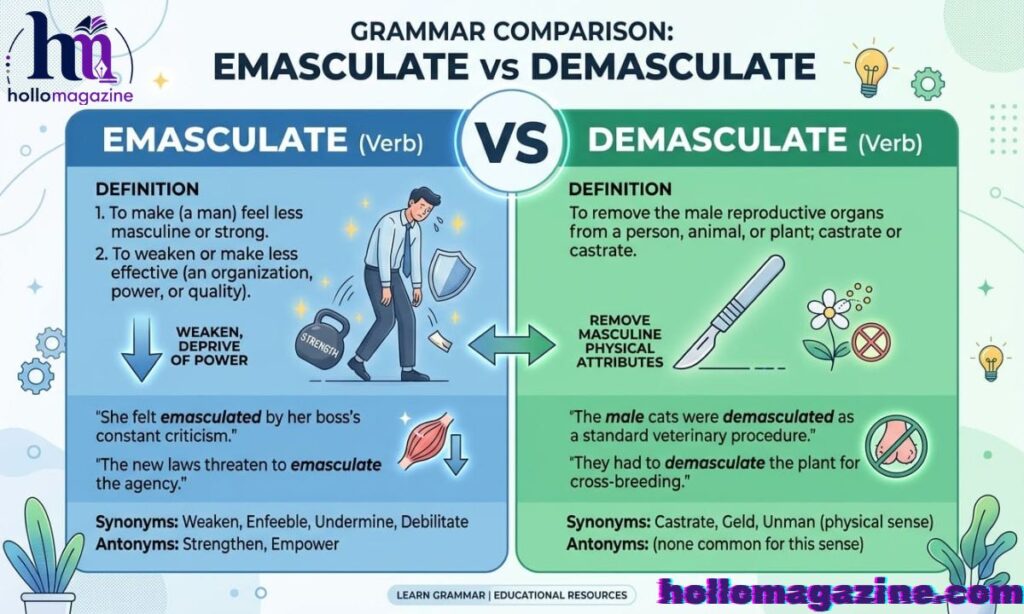
Understanding the verb forms helps ensure proper grammatical usage.
| Form | Usage |
| Base Verb | Emasculate |
| Third Person Singular | Emasculates |
| Present Participle | Emasculating |
| Past Tense | Emasculated |
| Past Participle | Emasculated |
| Noun Form | Emasculation |
| Adjective Form | Emasculated |
Examples of Verb Forms
Present Tense
- Excessive control emasculates individual creativity.
Present Continuous
- The new restrictions are emasculating employee independence.
Past Tense
- The harsh comments emasculated his confidence.
Past Participle
- He felt emasculated by the public criticism.
Noun Form
- The policy resulted in the emasculation of local authority.
Demasculate: Does This Word Actually Exist?
This is where most confusion occurs.
Is Demasculate a Real Word?
In standard English, demasculate is generally not recognized as a correct word. Major dictionaries and style guides do not list it as an accepted English term.
Many people assume that adding the prefix de- creates a logical opposite, similar to words like:
- Deactivate
- Devalue
- Deconstruct
- Decentralize
Because of this pattern, writers sometimes create demasculate by mistake. However, the word emasculate already carries the meaning of removing or reducing masculinity, making the extra prefix unnecessary.
Why People Use Demasculate
Several factors contribute to the confusion:
- It sounds grammatically logical.
- The prefix “de-” often means removal.
- Social media and informal discussions occasionally use it.
- Many people are unfamiliar with the origin of emasculate.
What Should You Use Instead?
Always use:
✅ Emasculate
Avoid:
❌ Demasculate
In professional, academic, and formal writing, emasculate is the accepted choice.
Read This: Is It Correct to Say “Day Well Spent”? Meaning, Alternatives & Examples
Emasculate vs. Demasculate Key Differences Explained
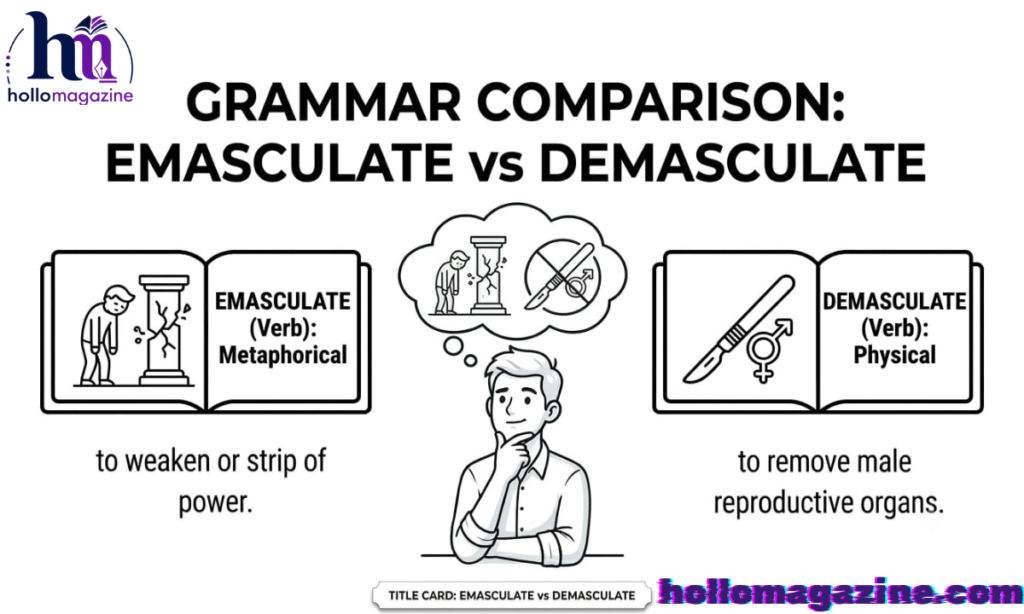
The easiest way to understand the distinction is through direct comparison.
| Feature | Emasculate | Demasculate |
| Recognized in Standard Dictionaries | Yes | Generally No |
| Accepted in Formal Writing | Yes | No |
| Commonly Used by Native Speakers | Yes | Rarely |
| Historical Origin | Latin | No established origin |
| Means Removing Strength or Masculinity | Yes | Intended meaning only |
| Recommended for Professional Use | Yes | No |
Key Difference Summary
Emasculate is the correct, dictionary-recognized term used to describe the loss of power, confidence, authority, or masculinity.
Demasculate is generally considered a nonstandard or mistaken variation and should be avoided in formal English.
Memory Trick
If you’re unsure which word to use, remember:
Emasculate is the original and accepted English word.
There is no need to add the extra de- prefix.
How to Use Emasculate Correctly in Sentences
Using the word naturally can improve both speaking and writing skills.
When Referring to Confidence or Authority
- Public humiliation can emasculate a person’s self-esteem.
- The constant interference emasculated his leadership role.
- He felt emasculated when his ideas were repeatedly ignored.
When Referring to Policies or Systems
- Critics argued that the amendment would emasculate the law.
- Budget cuts could emasculate the effectiveness of the program.
- Excessive bureaucracy often emasculates innovation.
When Referring to Relationships
- Some people mistakenly believe that asking for help emasculates them.
- He worried that his inability to provide financial support would emasculate him.
- Healthy relationships should not emasculate either partner.
Common Mistakes to Avoid
Mistake #1: Using Demasculate
❌ The comments demasculated him.
✅ The comments emasculated him.
Mistake #2: Assuming It Always Refers to Men
Although the word originates from masculinity, it is frequently used more broadly to describe weakening power, authority, or effectiveness.
Mistake #3: Using It in Positive Contexts
Emasculate generally carries a negative meaning because it implies loss, reduction, or weakening.
Tips for Correct Usage
- Use it when describing a reduction in power or confidence.
- Use it when discussing weakened systems or organizations.
- Avoid replacing it with demasculate.
- Consider the context to ensure the meaning remains clear.
Conclusion
The confusion between emasculate and demasculate is understandable because both words seem logically related to masculinity. However, standard English recognizes only emasculate as the correct and accepted term. It can describe the loss of masculine confidence, authority, strength, or even the weakening of a law, organization, or policy.
For accurate grammar and professional writing, always choose emasculate. While demasculate occasionally appears in informal conversations and online discussions, it is generally considered nonstandard and should be avoided in formal communication.
Frequently Asked Questions
What does emasculate mean?
Emasculate means to weaken, reduce confidence, diminish authority, or make someone feel less masculine.
Is demasculate a real word?
Demasculate is generally not recognized in standard English dictionaries and is considered nonstandard.
Which is correct: emasculate or demasculate?
Emasculate is the correct and accepted word in modern English.
Can emasculate be used for things as well as people?
Yes. It can describe laws, policies, organizations, or systems that have become weaker or less effective.
Is emasculate always about masculinity?
No. While the term originated from masculinity, modern usage often refers more broadly to weakening power, confidence, or effectiveness.
What is the noun form of emasculate?
The noun form is emasculation.
What are some synonyms of emasculate?
Common synonyms include weaken, undermine, diminish, debilitate, and disempower.

Rimsha creates simple grammar guides, English writing tips, and word meaning content for readers at Hollo Magazine.