
Many English words develop affectionate nicknames and shortened forms, especially when used around children. One common example is the word used for a child’s favorite blanket. Some people write it as blankie, while others prefer blanky, leading many writers to wonder which spelling is correct.
Although both spellings appear in everyday conversation, one form is generally more common and widely accepted. Understanding the difference between blankie and blanky can help improve your writing, especially when discussing childhood comfort items, parenting topics, and informal English expressions.
Blankie or Blanky The Straight Answer
The simple answer is that blankie is the more common and widely recognized spelling in modern English.
Both words refer to the same thing: a small blanket or comfort blanket, often associated with children.
| Spelling | Meaning | Common Usage |
| Blankie | Favorite blanket or comfort blanket | Very common |
| Blanky | Same meaning | Less common |
If you’re unsure which version to use, blankie is usually the safest choice.
What Does Blankie Mean?
A blankie is an affectionate term for a blanket, particularly one that provides comfort, security, or emotional attachment.
Children often develop strong bonds with certain objects, including:
- Blankets
- Stuffed animals
- Soft toys
- Comfort items
Examples:
- My daughter never sleeps without her blankie.
- He carried his blankie everywhere as a toddler.
- The old blankie helped her feel safe during travel.
The word is highly informal and commonly used in family settings.
What About Blanky Meaning?
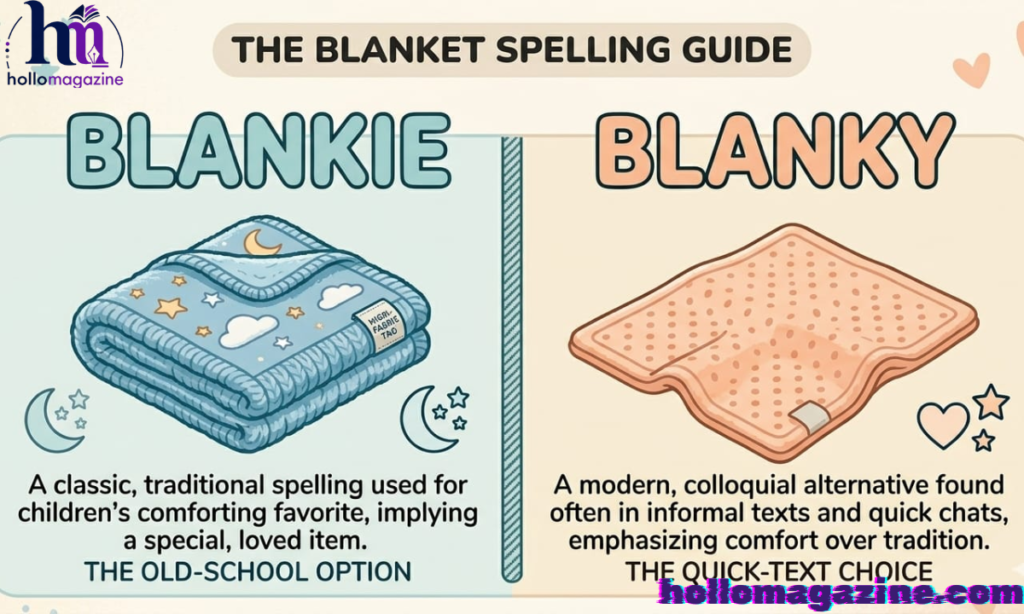
Blanky carries the same meaning as blankie.
It usually refers to:
- A child’s favorite blanket
- A comfort object
- A security blanket
- A cherished childhood item
Examples:
- She still keeps her blanky in a memory box.
- The toddler asked for his blanky before bedtime.
While the meaning remains identical, blanky appears less frequently in published writing.
Why Blankie Looks More Natural in English
English often forms affectionate words by adding the ending -ie or -y.
Examples include:
| Standard Word | Affectionate Form |
| Dog | Doggie |
| Bird | Birdie |
| Sweet | Sweetie |
| Aunt | Auntie |
| Blanket | Blankie |
The -ie ending feels natural because it follows a familiar English pattern used for affectionate and child-centered vocabulary.
As a result, many native speakers instinctively prefer blankie.
Is This an American vs British Spelling Issue?
Unlike some spelling differences, this is not primarily a British versus American English issue.
Examples of genuine regional spelling differences include:
- Color vs Colour
- Center vs Centre
- Organize vs Organise
Blankie and blanky do not follow this pattern.
Across English Dialects
- Americans commonly use blankie.
- Canadians commonly use blankie.
- Australians often use blankie.
- British speakers also recognize blankie.
Therefore, the difference is more about personal preference than regional spelling rules.
Informal vs Formal Usage
Both blankie and blanky belong to informal English.
They are typically used in:
- Family conversations
- Parenting discussions
- Children’s books
- Casual storytelling
Examples:
- The baby fell asleep holding her blankie.
- His blankie helped calm him down.
Formal writing generally uses:
- Blanket
- Comfort blanket
- Security blanket
- Transitional object
The level of formality matters more than the spelling choice.
Read This: Dutchess vs Duchess Stop Using the Wrong Royal Title
Why Some People Prefer Blanky
Although blankie is more common, some people prefer blanky for personal reasons.
Possible explanations include:
- Family tradition
- Regional habits
- Childhood pronunciation
- Personal preference
Language often develops through family usage, which explains why multiple spellings can exist simultaneously.
Parents sometimes continue using the version they heard growing up.
The Emotional Side Transitional Objects in Language
Psychologists often use the term transitional object to describe comfort items that help children feel secure.
These objects may include:
- Blankets
- Stuffed animals
- Dolls
- Soft toys
A blankie often becomes important because it provides:
- Familiarity
- Comfort
- Security
- Emotional support
This emotional connection explains why the word carries strong sentimental value for many families.
Common Spelling Mistakes People Make
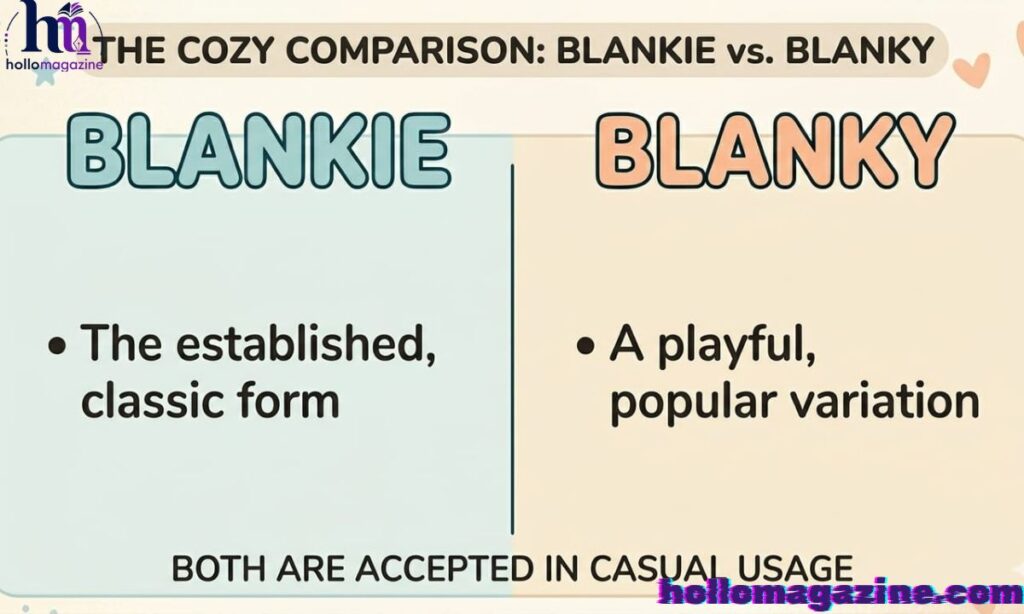
Several spelling variations occasionally appear online.
Common Errors
❌ Blankey
❌ Blanckie
❌ Blancky
❌ Blancky
Accepted Forms
✅ Blankie
✅ Blanky
Most dictionaries, parenting resources, and published materials tend to favor blankie.
Blankie Spelling Guide for Everyday Writing
If you’re writing for a broad audience, follow these guidelines:
Use Blankie When:
- Writing parenting content
- Creating children’s materials
- Writing blogs
- Sharing personal stories
- Communicating with general readers
Use Blanky When:
- Following family tradition
- Quoting someone directly
- Reflecting a specific personal preference
This approach keeps your writing natural and familiar.
Does Blankie vs Blanky Change Meaning?
No.
The meaning remains identical.
Both spellings describe:
- A favorite blanket
- A comfort blanket
- A security object
- A childhood comfort item
There is no significant difference in definition.
The distinction is purely orthographic, meaning it concerns spelling rather than meaning.
Which Spelling Do Native Speakers Prefer?
Usage patterns show that blankie is generally preferred.
Reasons include:
- Greater visibility in books
- More common use in parenting content
- Familiar English spelling patterns
- Stronger recognition among readers
Although blanky is understood, blankie tends to sound more natural to many native speakers.
Preference Comparison
| Criterion | Blankie | Blanky |
| Reader Familiarity | High | Moderate |
| Parenting Content | Common | Less Common |
| Informal Speech | Common | Common |
| Published Writing | More Common | Less Common |
Informal Terms in English and Diminutive Forms
Blankie belongs to a group of words known as diminutives.
Diminutives often express:
- Affection
- Familiarity
- Small size
- Emotional closeness
Examples include:
- Doggie
- Kitty
- Birdie
- Sweetie
- Blankie
These forms are especially common in language directed toward children.
Should You Avoid Both in Formal Writing?
In most professional writing, yes.
Instead, consider using:
- Blanket
- Comfort blanket
- Security blanket
- Transitional object
Examples:
Formal:
- The child remained attached to a security blanket.
Informal:
- The child wouldn’t leave home without a blankie.
Choosing the appropriate level of formality improves clarity and professionalism.
A Practical Example
Imagine you’re writing a parenting article.
Informal version:
“The toddler carried her blankie everywhere she went.”
Formal version:
“The toddler showed a strong attachment to her comfort blanket.”
Both are correct, but the audience determines which is more suitable.
Quick Memory Trick
A simple way to remember the preferred spelling:
Think of these familiar words:
- Sweetie
- Birdie
- Doggie
Blankie follows the same pattern.
Easy Rule
If in doubt, choose blankie.
It is the spelling most readers expect to see.
Reference Cambridge Dictionary Definitions
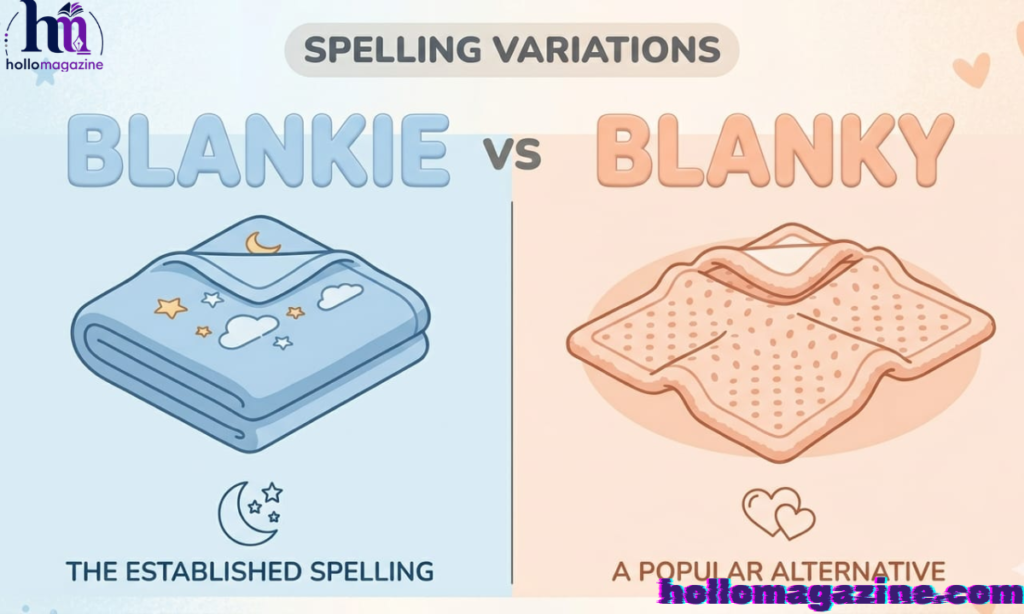
Cambridge Dictionary recognizes blanket as a large covering used for warmth, comfort, or protection.
While blankie and blanky are informal affectionate forms derived from blanket, blankie is generally the more commonly encountered version in modern English usage. Both words function as informal family-centered vocabulary rather than formal dictionary terminology.
Conclusion
The debate between blankie and blanky is largely a matter of spelling preference rather than meaning. Both words describe a cherished comfort blanket, often associated with childhood security, emotional attachment, and family memories. However, blankie is generally the more common and widely accepted spelling.
When writing for a broad audience, blankie is usually the best choice because it aligns with familiar English diminutive patterns and reader expectations. Whether you use blankie or blanky, the comforting idea behind the word remains exactly the same.
Frequently Asked Questions
Is blankie or blanky correct?
Both are correct informal spellings, but blankie is more common.
What does blankie mean?
Blankie is an affectionate term for a favorite blanket or comfort blanket.
Does blanky mean something different?
No. Blanky has the same meaning as blankie.
Which spelling do native speakers prefer?
Most native speakers encounter blankie more frequently.
Is blankie a real word?
Yes. It is a widely recognized informal English word.
Can adults use the word blankie?
Yes. Adults often use it when discussing childhood memories or family experiences.
Is blankie formal English?
No. It is considered informal and affectionate language.
What is a transitional object?
A transitional object is a comfort item that helps children feel secure and emotionally supported.

Rimsha creates simple grammar guides, English writing tips, and word meaning content for readers at Hollo Magazine.