
Learning the difference between tear and tare can save you from common writing mistakes. These two words sound alike, making them homophones, but they have completely different meanings. One belongs to everyday language and emotions, while the other is mostly used in technical, scientific, and weighing contexts.
Many English learners mix up tear and tare because they are pronounced similarly in some contexts. Understanding where each word comes from and how it is used will help you choose the correct word every time. This guide explains the meanings, origins, examples, and memory tricks in a simple and practical way.
Why Do These Identical-Sounding Words Confuse People?
The confusion happens because tear and tare are homophones. They sound the same when tear means “to rip,” but their meanings are unrelated.
Common reasons people confuse them include:
- Similar pronunciation
- Similar spelling
- Lack of exposure to the technical meaning of tare
- Autocorrect and typing mistakes
- Contextual misunderstandings
Quick Comparison Table
| Word | Meaning | Common Context |
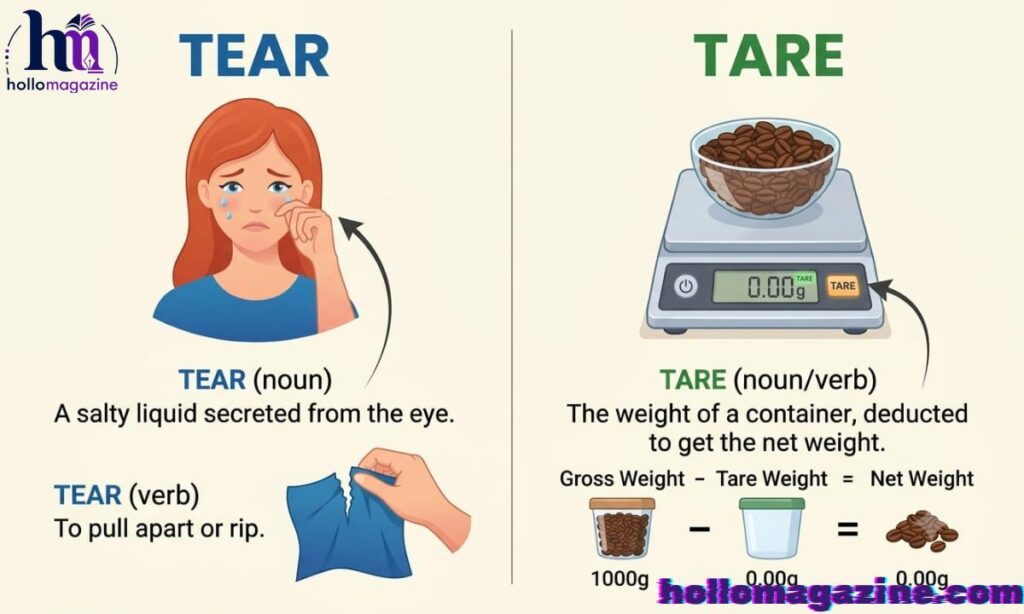
| Tear | To rip something or a drop from the eye | Everyday English |
| Tare | Container weight deducted from total weight | Weighing, science, logistics |
Where Did Tear and Tare Come From?
Understanding the origins of these words makes it easier to remember their meanings.
The Germanic Path: How Tear Evolved
The word tear comes from ancient Germanic languages and has existed in English for centuries. It originally referred to pulling or ripping something apart. Over time, it also became associated with tears from the eyes. Historical records show that both meanings have been used for hundreds of years.
Examples:
- Tear a piece of paper.
- A tear rolled down her cheek.
The Arabic Journey: How Tare Arrived
The word tare entered English through French and Italian trading terminology. It refers to the weight of packaging or containers that must be subtracted to find the net weight of goods. This meaning remains common in shipping, laboratories, warehouses, and cooking.
Examples:
- Tare the scale before weighing ingredients.
- The tare weight of the container is listed on the label.
How Do You Use Tear vs Tare in Different Contexts?
Everyday Writing with Tear
Most people encounter tear regularly.
As a noun:
- She wiped away a tear.
- A tear appeared in the fabric.
As a verb:
- Please do not tear the document.
- He accidentally tore his shirt.
Technical Writing with Tare
Tare is used primarily when discussing weight measurements.
Examples:
- The technician recorded the tare weight.
- Tare the scale before adding the ingredients.
- The shipping company deducted the tare weight from the gross weight.
When Context Makes It Obvious
Consider these sentences:
- She shed a tear after hearing the news.
- Please tare the scale before measuring the flour.
Even though the words sound similar, the surrounding words make the intended meaning clear.
Examples of Tear in Classic Literature
Famous Uses in Old Books
Writers have long used tear to describe emotions and physical damage.
Examples commonly found in literature include:
- A tear fell from her eye.
- His coat had a tear in the sleeve.
- The letter was torn into pieces.
Because tear expresses strong emotions, it appears frequently in novels, poetry, and drama.
Modern Business and Technical Writing
In professional writing, tear may appear when discussing:
- Material damage
- Equipment failure
- Medical injuries
Examples:
- The report noted a tear in the protective covering.
- The athlete suffered a muscle tear.
Meanwhile, tare appears in technical documents involving weight calculations and shipping records.
Read This: City vs Town vs Village: What’s the Difference?
What Words Mean the Same as Tear vs Tare?
Words Related to Tear
Depending on the meaning, synonyms include:
For ripping:
- Rip
- Split
- Rend
- Shred
For crying:
- Teardrop
- Droplet
- Crying tear
Words Related to Tare
Related terms include:
- Net weight
- Container weight
- Deduction
- Calibration weight
- Weight adjustment
Visualizing the Differences
Think of it this way:
| Word | Visual Image |
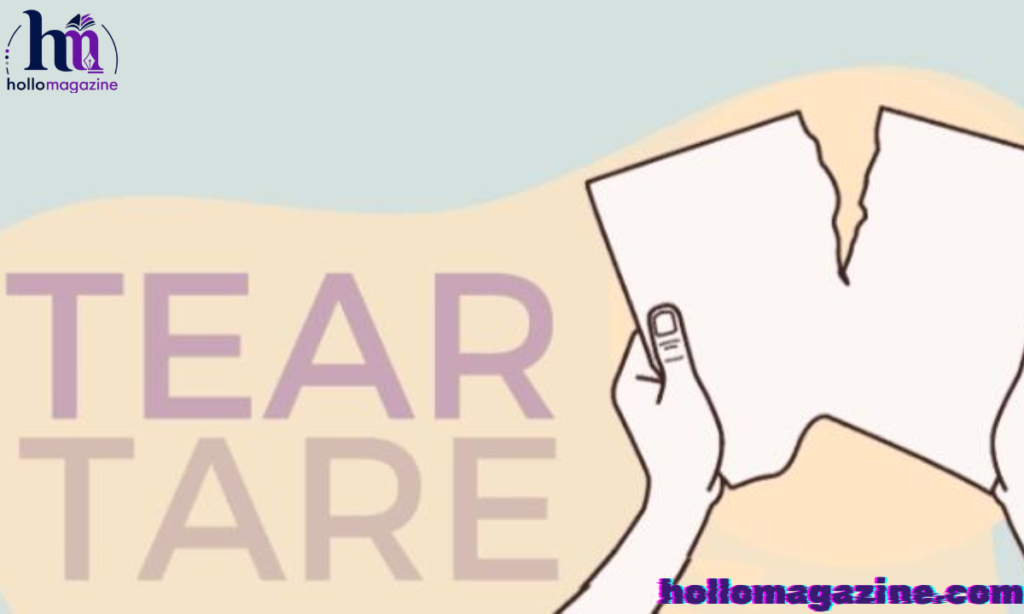
| Tear | A person crying or paper ripping |
| Tare | A digital scale showing zero |
This simple visualization helps many learners remember the distinction.
American and British English
Both American and British English use tear and tare in essentially the same way.
There are no major spelling differences between regions. The only variation may be pronunciation depending on local accents. The meanings remain identical across English-speaking countries.
Common Mistakes When Using Tear vs Tare
Writers frequently make these errors:
Mistake 1: Using Tear Instead of Tare
Incorrect:
- Tear the scale before weighing the sugar.
Correct:
- Tare the scale before weighing the sugar.
Mistake 2: Using Tare Instead of Tear
Incorrect:
- A tare rolled down her cheek.
Correct:
- A tear rolled down her cheek.
Mistake 3: Confusing Verb Forms
Remember:
| Base Form | Past Tense | Past Participle |
| Tear | Tore | Torn |
| Tare | Tared | Tared |
Examples:
- He tore the envelope.
- The fabric was torn.
- She tared the scale.
Practical Tips for Using Tear vs Tare Correctly

Follow these simple rules:
Real-World Editing Experience
Professional editors often encounter these mistakes because spell-checkers may not catch them. Since both words are correctly spelled English words, context becomes important.
Always ask:
- Am I talking about ripping or crying? → Use tear
- Am I talking about weight measurement? → Use tare
Memory Tricks That Work
Try these easy mnemonics:
Tear = Emotion
- The letter E can remind you of Emotion or Eye.
Tare = Accounting
- The letter A can remind you of Accounting and Adjustment.
Another simple trick:
- Tears come from eyes.
- Tare belongs to scales.
Conclusion
Tear and tare may sound alike, but they serve completely different purposes in English. Tear refers to ripping something apart or a drop of liquid from the eye, while tare refers to the weight of a container or the process of resetting a scale before measuring contents. Understanding this distinction improves both writing accuracy and communication clarity.
The easiest way to remember the difference is to focus on context. If the sentence involves emotions, damage, fabric, or crying, use tear. If it involves weighing, shipping, laboratories, cooking, or measurements, use tare. With a little practice, choosing the correct word becomes automatic.
Frequently Asked Questions
What is the difference between tear and tare?
A tear is either a rip or a drop from the eye, while tare refers to container weight deducted during measurement.
Is tare a common English word?
Yes, but it is mostly used in technical fields such as shipping, science, manufacturing, and cooking.
Can tear be both a noun and a verb?
Yes. Tear can mean a rip or teardrop as a noun, and it can also mean to rip something as a verb.
What does it mean to tare a scale?
It means resetting the scale to zero after placing a container on it so only the contents are measured.
Why do people confuse tear and tare?
Because they are homophones that sound alike but have different meanings and uses.

Rimsha creates simple grammar guides, English writing tips, and word meaning content for readers at Hollo Magazine.