
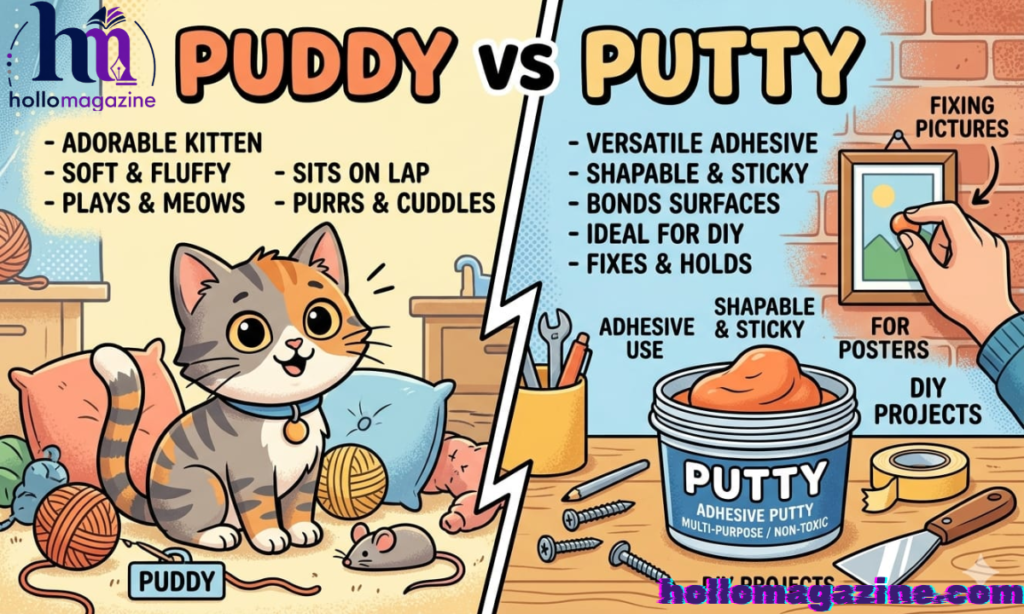
English spelling can be surprisingly tricky, especially when two words sound alike or appear similar at first glance. One common confusion is Puddy vs Putty. Many people encounter both spellings online and wonder which one is correct in standard English.
The answer depends on the context. While putty is a well-established English word found in dictionaries, puddy is usually a misspelling or a proper noun used in specific names and fictional characters. Understanding the difference can help improve your writing accuracy and prevent embarrassing spelling mistakes.
Quick Answer Puddy or Putty
If you’re referring to the soft material used for sealing, filling, molding, or repairing surfaces, putty is the correct spelling.
| Word | Correct Standard English? | Meaning |
| Putty | ✅ Yes | A soft material used for sealing, filling, or modeling |
| Puddy | ❌ Usually No | Common misspelling of putty or a proper name in specific contexts |
For grammar, spelling, and everyday usage, putty is the correct choice.
What Does Putty Mean?
The word putty refers to a soft, moldable substance commonly used in construction, repairs, crafts, and technology.
Depending on the context, putty may be used to:
- Fill cracks and holes
- Seal windows
- Repair surfaces
- Create artistic models
- Fix minor imperfections
Examples:
- The carpenter applied putty to the wooden frame.
- Window putty helped seal the glass securely.
- She used modeling putty to create a sculpture.
The term can also appear in technology and figurative language.
The Origin and History of Putty
The word putty has a long history dating back several centuries.
Its roots can be traced through:
- Old French language influences
- Medieval construction terminology
- Traditional glazing and woodworking practices
Historically, putty was made from a mixture of:
- Whiting (powdered chalk)
- Linseed oil
- Various binding materials
Builders used it to secure glass panes in wooden window frames long before modern sealants became common.
Over time, the meaning expanded to include many other soft filling and modeling materials.
Puddy vs Putty British and American English
One reason for confusion is the assumption that “puddy” might be a British or American variation.
In reality, both British and American English overwhelmingly use putty.
British English
Examples:
- Window putty
- Glazing putty
- Wood putty
American English
Examples:
- Repair putty
- Wall putty
- Silicone putty
The spelling remains consistent across both major forms of English.
| Usage | British English | American English |
| Putty | ✅ Yes | ✅ Yes |
| Puddy | ❌ No | ❌ No |
This makes putty one of those words that does not change spelling between dialects.
Read This: Tweek vs Tweak Clarifying the Difference and Usage
Common Mistakes People Make
Many writers accidentally use “puddy” instead of “putty.”
Why It Happens
Common reasons include:
- Pronunciation confusion
- Typing mistakes
- Limited exposure to the written word
- Autocorrect issues
- Influence from fictional names
Examples of incorrect usage:
❌ I bought some puddy to repair the wall.
❌ The window needs fresh puddy.
Correct versions:
✅ I bought some putty to repair the wall.
✅ The window needs fresh putty.
Learning the correct spelling helps avoid these common mistakes.
Putty in Everyday Life
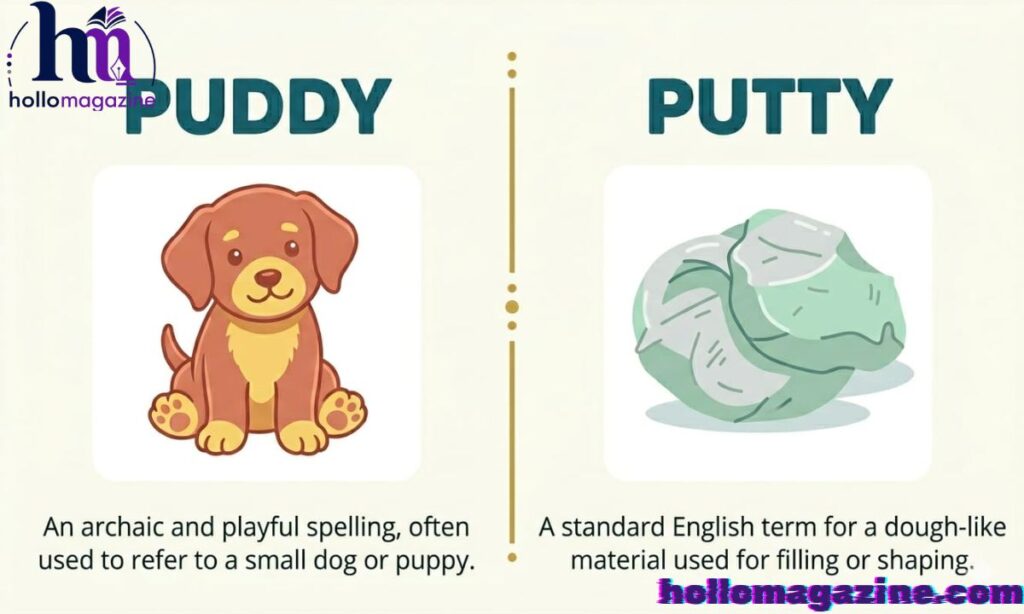
Putty appears in many areas beyond construction.
DIY and Home Repair
This is the most familiar use of putty.
Examples include:
- Filling nail holes
- Repairing damaged wood
- Sealing windows
- Patching minor cracks
Popular types include:
- Wood putty
- Glazing putty
- Wall putty
- Epoxy putty
DIY enthusiasts frequently rely on these products.
Arts and Crafts
Artists and hobbyists often use specialized putty.
Examples:
- Modeling putty
- Sculpting putty
- Craft putty
Benefits include:
- Easy shaping
- Flexible texture
- Reusability in some products
Putty is commonly used in educational and creative projects.
Technology
The word also appears in technology.
Examples include:
- Network configuration tools
- Security applications
- Data transfer software
One well-known example is software named “PuTTY,” a computer application used for remote connections.
In this case, the word functions as a proper name rather than a construction material.
Figurative Expressions
Putty sometimes appears in figurative language.
Examples:
- He was putty in her hands.
- The audience became putty in the speaker’s hands.
This expression suggests someone is easily influenced or persuaded.
How to Use Putty in a Sentence
The best way to remember correct usage is through examples.
Construction Examples
- The builder applied putty around the window frame.
- Fresh putty filled the crack in the wall.
Home Improvement Examples
- We used wood putty to repair the table.
- The damaged area needed additional putty.
Creative Examples
- The children shaped animals from colorful putty.
- Modeling putty helped bring the design to life.
Figurative Examples
- The negotiator had the crowd like putty in his hands.
- Her persuasive argument turned critics into putty.
These examples demonstrate the word’s versatility.
Common Spelling Errors and How to Avoid Them
Several mistakes frequently occur when writing putty.
Common Errors
❌ Puddy
❌ Puttie
❌ Putti
❌ Puti
✅ Putty
Helpful Memory Tricks
Remember:
- Putty contains two “t” letters.
- Putty ends with “y.”
- Think of “repair putty” whenever you see the word.
Another simple trick:
Putty helps you put things back together.
Both words begin with “put.”
Proofreading Tips
- Use spell-check tools.
- Read documents carefully before publishing.
- Verify technical terms when writing about construction.
- Keep a list of commonly misspelled words.
These habits can significantly improve writing accuracy.
Reference Cambridge Dictionary Definitions

According to Cambridge Dictionary, putty is a soft substance used for filling holes and cracks, especially around windows and wooden surfaces.
The dictionary also recognizes figurative uses where someone is described as being “like putty in someone’s hands,” meaning they are easily influenced or controlled.
Cambridge Dictionary recognizes putty as the standard English spelling. The spelling puddy is not listed as a standard alternative for the material used in construction, repairs, or crafts.
Conclusion
The difference between puddy and putty is straightforward once you understand the context. Putty is the correct English word used to describe a soft material for filling, sealing, repairing, and modeling. It appears in construction, DIY projects, arts and crafts, technology, and figurative expressions.
Puddy, on the other hand, is generally a misspelling when someone intends to write putty. Unless it appears as a proper name or character name, it should usually be replaced with the correct spelling. Remembering this distinction will improve your grammar, spelling accuracy, and overall writing quality.
Frequently Asked Questions
Is puddy or putty correct?
Putty is the correct spelling in standard English.
What does putty mean?
Putty is a soft material used for filling holes, sealing surfaces, and making repairs.
Is puddy a real word?
It may appear as a proper name, but it is not the standard English word for the material.
Is putty used in both British and American English?
Yes. Both forms of English use the spelling putty.
What is wood putty?
Wood putty is a filler used to repair small holes, dents, and imperfections in wood surfaces.
What does “putty in someone’s hands” mean?
It means a person is easily influenced, controlled, or persuaded.
Is PuTTY software related to construction putty?
No. PuTTY is a software name and not the physical material.
How can I remember the correct spelling?
Remember that putty has two “t” letters and is commonly associated with repairs and sealing materials.

Rimsha creates simple grammar guides, English writing tips, and word meaning content for readers at Hollo Magazine.