
Many English learners confuse sweet and sweat because the words look similar and differ by only one letter. However, their meanings, pronunciation, and usage are completely different. Using the wrong word can change the meaning of a sentence and create confusion for readers.
Understanding the difference between sweet and sweat helps improve grammar, vocabulary, writing accuracy, and communication skills. This guide explains the meanings, pronunciation, examples, idioms, grammar rules, and memory tricks that make these two words easy to distinguish.
Sweet Meaning
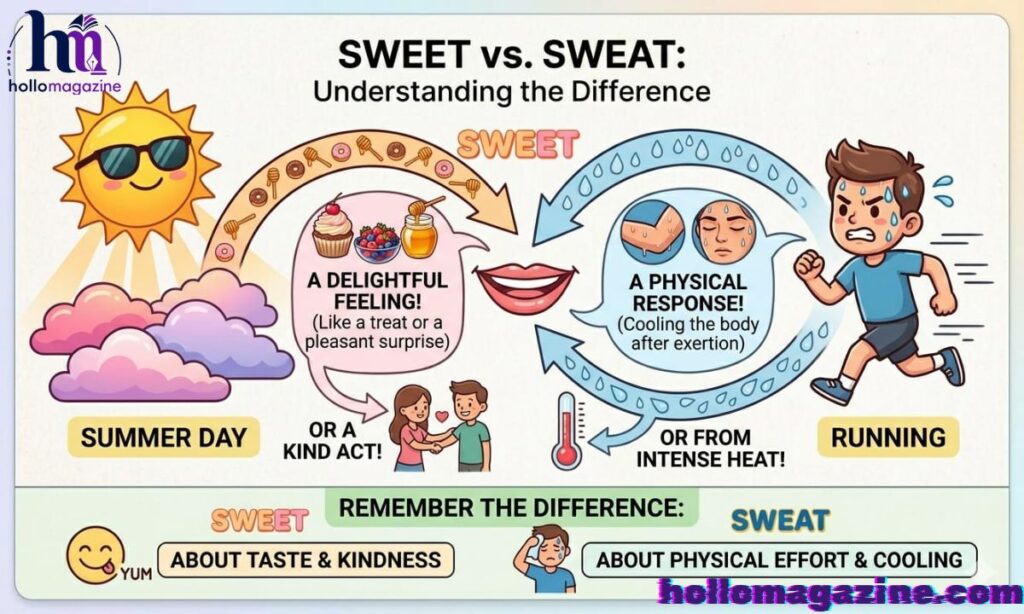
The word sweet is usually an adjective. It commonly describes something that tastes like sugar or something pleasant, kind, or enjoyable.
Examples:
- This cake is very sweet.
- She has a sweet personality.
- That was a sweet gesture.
Common meanings of sweet include:
- Sugary in taste
- Kind or thoughtful
- Pleasant or delightful
- Attractive or charming
Sweat Meaning
The word sweat is usually a noun or a verb. It refers to the moisture produced by the body, especially during exercise, heat, stress, or illness.
Examples:
- Sweat covered his forehead after the race.
- I sweat a lot during workouts.
- The athlete was sweating heavily.
Common meanings of sweat include:
- Body moisture
- Physical exertion
- Hard work or effort
- Stress-related perspiration
Why “Sweet” and “Sweat” Are Often Confused
Several factors contribute to the confusion:
- Similar spelling
- Similar pronunciation patterns
- Fast reading mistakes
- Typing errors
- English learners focusing on spelling rather than meaning
Because only one vowel sound changes, many writers accidentally choose the wrong word.
Quick Answer: Sweet vs Sweat Meaning
| Word | Meaning | Part of Speech |
| Sweet | Pleasant, sugary, kind | Usually adjective |
| Sweat | Body moisture or perspire | Noun or verb |
Simple rule:
- Sweet = pleasant
- Sweat = perspiration
Understanding the Core Difference Between Sweet and Sweat
Sweet – Meaning and Emotional Use
Sweet often describes positive feelings, behavior, or experiences.
Examples:
- You are very sweet.
- That was a sweet surprise.
- She gave a sweet smile.
Emotional uses include:
- Kindness
- Affection
- Warmth
- Friendliness
Sweat – Meaning and Physical Use
Sweat relates to physical processes and effort.
Examples:
- The runners were covered in sweat.
- I sweat when exercising.
- His hard work and sweat paid off.
Physical uses include:
- Exercise
- Heat
- Stress
- Physical labor
Read This: Too Many vs To Many: Which One Is Grammatically Correct?
Pronunciation Guide: Sweet vs Sweat
Although similar, the vowel sounds differ.
| Word | Pronunciation | Sound |
| Sweet | /swiːt/ | Long “ee” |
| Sweat | /swet/ | Short “e” |
Pronunciation tip:
- Sweet sounds like “street” without “tr.”
- Sweat sounds similar to “wet.”
Practice:
- Sweet treat
- Sweat shirt
- Sweet smile
- Sweat drops
Grammar and Word Forms Compared

| Feature | Sweet | Sweat |
| Adjective | Yes | No |
| Noun | Rarely | Yes |
| Verb | No | Yes |
| Describes Taste | Yes | No |
| Describes Perspiration | No | Yes |
Examples:
Sweet as an adjective:
- The tea is sweet.
Sweat as a noun:
- Sweat dripped from his face.
Sweat as a verb:
- Athletes sweat during training.
Usage in Everyday Contexts
Using “Sweet” in Daily Life
Common situations include:
- Complimenting someone
- Describing food
- Expressing appreciation
- Talking about pleasant experiences
Examples:
- That’s sweet of you.
- The chocolate is sweet.
- What a sweet message.
Using “Sweat” in Daily Life
Common situations include:
- Discussing exercise
- Talking about health
- Describing weather conditions
- Mentioning hard work
Examples:
- I sweat during summer.
- The workers sweated all day.
- Sweat soaked his shirt.
Easy Tips to Remember Sweet vs Sweat
Try these memory tricks:
- Sweet contains “ee” like “treat.”
- Sweat contains “ea” like “heat” causes sweat.
- Sweet relates to pleasant feelings.
- Sweat relates to physical activity.
Quick reminder:
Sweet = Smile
Sweat = Exercise
Idioms and Common Expressions
Idioms with “Sweet”
Common expressions include:
- Sweet dreams
- Sweet success
- Sweet deal
- Home sweet home
Examples:
- Have sweet dreams tonight.
- They finally achieved sweet success.
Idioms with “Sweat”
Common expressions include:
- Don’t sweat it
- Blood, sweat, and tears
- Sweat bullets
- Break into a sweat
Examples:
- Don’t sweat it; everything will be fine.
- Success often requires blood, sweat, and tears.
Common Mistakes and Confusions
Many learners make mistakes such as:
❌ I sweat your gift was thoughtful.
✔ I thought your gift was sweet.
❌ This dessert is very sweat.
✔ This dessert is very sweet.
❌ The athlete looked sweet after the marathon.
✔ The athlete looked sweaty after the marathon.
Common causes:
- Spelling confusion
- Pronunciation confusion
- Autocorrect errors
- Lack of vocabulary awareness
How to Remember the Difference Easily
Use this quick comparison:
| Think About | Word |
| Candy | Sweet |
| Cake | Sweet |
| Exercise | Sweat |
| Running | Sweat |
| Kind Person | Sweet |
| Hot Weather | Sweat |
Visual associations often make learning easier.
Comparison Table: Sweet vs Sweat

| Feature | Sweet | Sweat |
| Meaning | Pleasant, sugary | Perspiration |
| Grammar Role | Adjective | Noun/Verb |
| Emotional Meaning | Yes | No |
| Physical Meaning | No | Yes |
| Common Context | Food, kindness | Exercise, heat |
| Pronunciation | Long “ee” | Short “e” |
Linguistic Insight: Why Small Vowels Change Meaning
English contains many words that differ by only one vowel sound.
Examples:
- Ship vs Sheep
- Full vs Fool
- Bit vs Beat
- Sweet vs Sweat
These small vowel changes create completely different meanings. Linguists call these distinctions minimal pairs, and they are important for pronunciation accuracy.
Expert Opinion: Choosing the Right Word Confidently
Grammar teachers and language experts recommend focusing on context rather than spelling alone.
Ask yourself:
- Am I describing something pleasant? → Sweet
- Am I describing perspiration or effort? → Sweat
This simple question solves most confusion immediately.
Practice Section: Choose Sweet or Sweat
Choose the correct word.
- The lemonade tastes very ______.
- I began to ______ after running.
- She sent me a ______ note.
- The athlete was covered in ______.
- What a ______ surprise.
Practice Answers
- Sweet
- Sweat
- Sweet
- Sweat
- Sweet
Conclusion
Although sweet and sweat differ by only one letter, they have completely different meanings. Sweet relates to pleasantness, kindness, and sugary tastes, while sweat refers to perspiration and physical effort.
By understanding their pronunciation, grammar roles, and common usage patterns, you can avoid mistakes and communicate more clearly. A simple memory trick—sweet for pleasant things, sweat for physical effort—can help you remember the correct word every time.
Frequently Asked Questions
Is sweet a noun or adjective?
Sweet is most commonly used as an adjective.
Can sweat be a verb?
Yes. Sweat can function as both a noun and a verb.
Why do learners confuse sweet and sweat?
Their spellings are very similar and differ by only one vowel sound.
What does “Don’t sweat it” mean?
It means “don’t worry about it.”
Can sweet describe a person?
Yes. It often means kind, thoughtful, or pleasant.

Rimsha creates simple grammar guides, English writing tips, and word meaning content for readers at Hollo Magazine.