
Many English learners confuse distress and duress because the words look and sound similar. Both are associated with difficult situations, emotional reactions, and serious circumstances. However, their meanings are very different, and using the wrong one can completely change the meaning of a sentence.
Understanding the difference between distress and duress is important for clear communication, academic writing, legal documents, and everyday English. This guide explains the meanings, examples, grammar rules, common mistakes, and memory tricks to help you use both words correctly.
Distress vs Duress Quick Difference
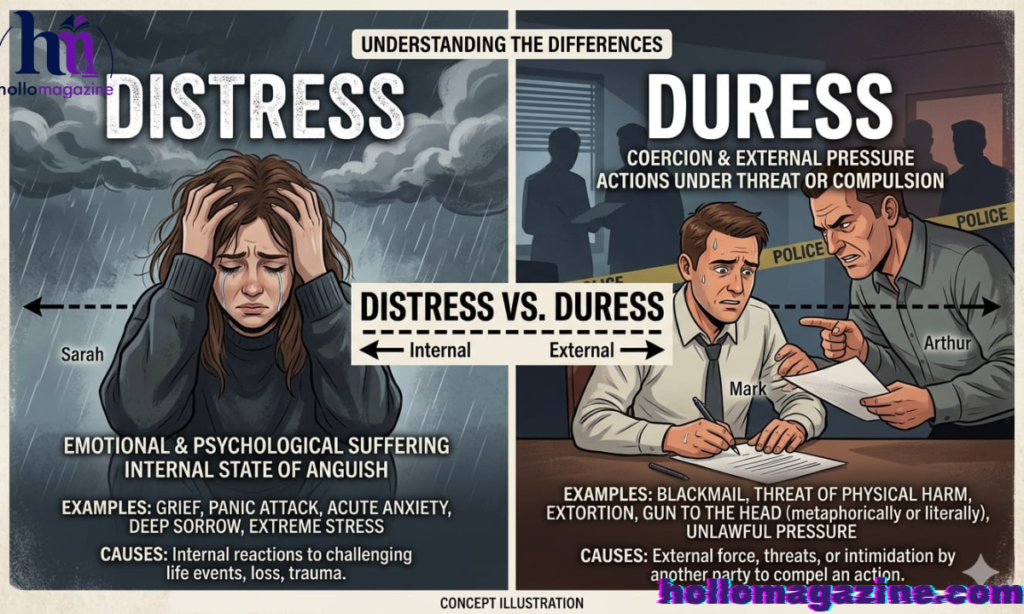
The simplest difference is:
| Word | Meaning |
| Distress | Extreme suffering, worry, pain, or hardship |
| Duress | Pressure, threats, or coercion forcing someone to act |
Quick examples:
- She was in emotional distress after hearing the news.
- He signed the contract under duress.
In the first sentence, the person is suffering emotionally. In the second, the person is being forced or pressured to do something.
What Distress Means
According to major English dictionaries, distress refers to severe mental, emotional, physical, or financial suffering. It can also describe a dangerous situation where help is needed.
Emotional distress
Emotional distress refers to intense feelings of sadness, anxiety, grief, or psychological pain.
Examples:
- The accident caused severe emotional distress.
- She experienced distress after losing her job.
- The news left him in obvious distress.
Common phrases:
- emotional distress
- psychological distress
- mental distress
Financial distress
Financial distress occurs when a person or organization struggles with money or debt.
Examples:
- The company entered financial distress.
- Rising costs placed many families in distress.
- The business faced economic distress during the recession.
Common phrases:
- financial distress
- economic distress
- debt distress
Physical distress
Physical distress refers to pain, injury, illness, or a dangerous condition requiring assistance.
Examples:
- The hikers showed signs of physical distress.
- The patient appeared to be in distress.
- The ship sent a distress signal during the storm.
Common phrases:
- physical distress
- signs of distress
- distress signal
What Duress Means
Duress is a formal word that refers to threats, pressure, or coercion used to force someone to do something against their will. It is especially common in legal English.
Duress in everyday language
Although less common in casual conversation, duress can describe situations where someone acts because of strong pressure or threats.
Examples:
- He agreed only under duress.
- She spoke under duress from her employer.
- They felt forced to cooperate under duress.
The phrase under duress is the most common use.
Duress in law
In legal contexts, duress occurs when a person is forced into an action because of threats, intimidation, or coercion.
Examples:
- The defendant claimed the confession was signed under duress.
- The contract was challenged because it was signed under duress.
- The court examined whether coercion existed.
Legal terms often associated with duress include:
- coercion
- intimidation
- threats
- forced consent
- undue pressure
The Key Difference Between Distress and Duress
The core difference is simple:
- Distress describes suffering.
- Duress describes being forced.
| Feature | Distress | Duress |
| Emotional pain | Yes | No |
| Financial hardship | Yes | No |
| Physical suffering | Yes | No |
| Threats or coercion | No | Yes |
| Common in law | Sometimes | Very common |
| Common phrase | In distress | Under duress |
Remember:
- Distress = pain or hardship.
- Duress = pressure or force.
Read This: Reevaluation or Re-evaluation: Hyphen Rules in American English
Using Distress in Sentences
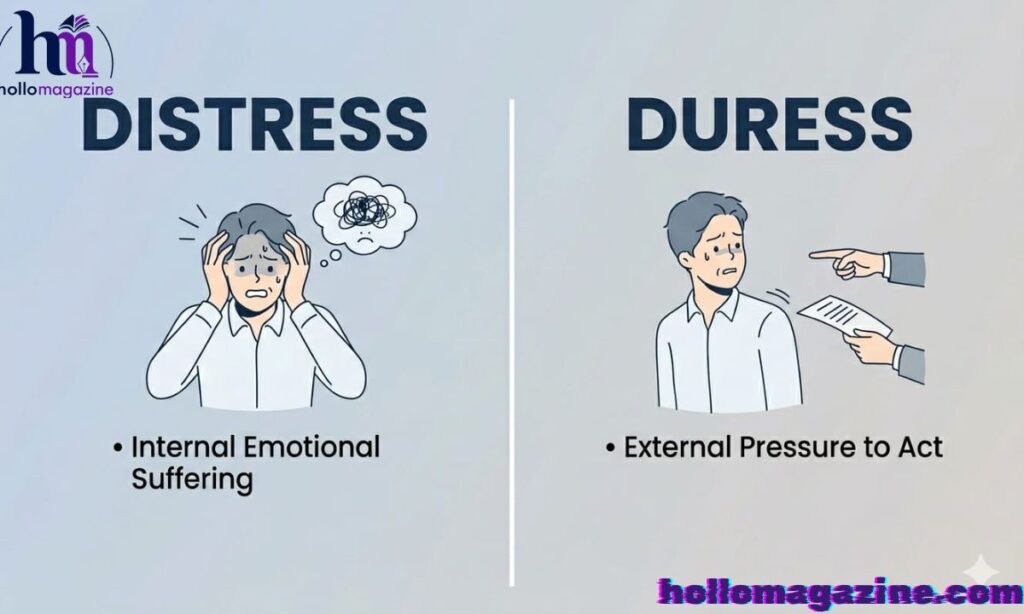
Here are common examples:
- The family was in distress after the disaster.
- He suffered emotional distress.
- The patient showed signs of distress.
- Financial distress forced the company to close stores.
- The rescue team responded to a distress call.
Notice that all these examples involve suffering, difficulty, or danger.
Using Duress in Sentences
Examples:
- He signed the agreement under duress.
- She confessed under duress.
- The witness claimed intimidation and duress.
- They acted under duress from criminal groups.
- The statement was made under duress.
Notice that duress involves pressure, threats, or force.
Why People Confuse Distress and Duress
Several factors cause confusion.
Similar sound
Both words end with “-ress” and have similar pronunciation patterns.
Compare:
- Distress
- Duress
Many learners hear them but do not notice the difference immediately.
Similar spelling
The words share several letters and look alike when written quickly.
Compare:
- distress
- duress
Because of this visual similarity, spelling mistakes are common.
Both appear in serious situations
Both words often occur in negative or difficult situations.
Examples:
- emotional distress
- contract signed under duress
Since both involve hardship, people sometimes use the wrong term.
Common Mistakes to Avoid
Using distress when duress is intended
Incorrect:
- He signed the contract under distress.
Correct:
- He signed the contract under duress.
Why?
The issue is coercion, not emotional suffering.
Using duress for emotional pain
Incorrect:
- She experienced duress after the breakup.
Correct:
- She experienced distress after the breakup.
Why?
Breakups usually cause emotional suffering, not coercion.
Misusing the phrase under duress
The phrase under duress should only be used when someone is pressured or forced.
Correct:
- He acted under duress.
Incorrect:
- She felt sad under duress after the movie.
Sadness is distress, not duress.
How to Remember the Difference
Try these simple memory tricks:
Distress = Discomfort
Both begin with DIS.
Think:
- Distress = discomfort
- Distress = difficulty
Duress = Driven by force
Think of duress as being driven or forced into action.
Memory shortcut:
- Distress → suffering
- Duress → pressure
Quick test:
Ask yourself:
“Am I describing pain or pressure?”
- Pain → distress
- Pressure → duress
Situations Where Both Words Appear
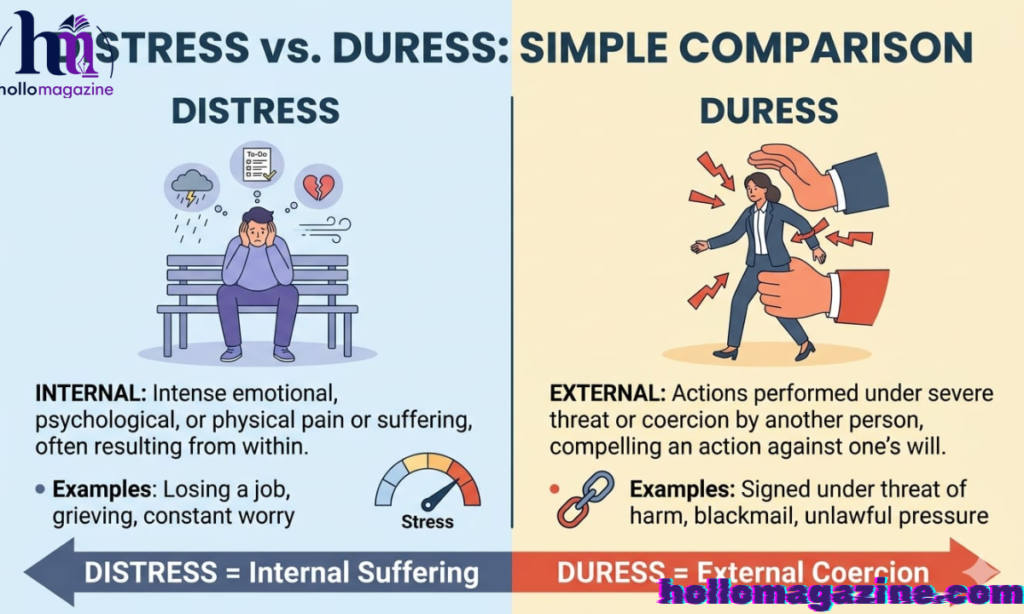
Sometimes both words can occur in the same situation.
Example:
A worker is threatened by a supervisor.
Results:
- The worker experiences emotional distress.
- The worker acts under duress.
Another example:
A victim receives threats.
- The threats create distress.
- The threats also create duress.
This shows that the two words can be related while still having different meanings.
Reference Cambridge Dictionary Definitions
Cambridge Dictionary defines distress as extreme worry, sadness, pain, suffering, or a dangerous situation requiring help.
Cambridge Dictionary defines duress as threats used to force a person to do something, especially in formal or legal situations.
These definitions highlight the essential distinction:
- Distress focuses on suffering.
- Duress focuses on coercion.
conclusion
Although distress and duress look similar, they have very different meanings. Distress refers to emotional, physical, or financial suffering, while duress refers to pressure, threats, or coercion that force someone to act against their wishes.
Learning this distinction helps improve grammar accuracy, vocabulary skills, and professional writing. Whenever you encounter these words, remember that distress involves pain and hardship, while duress involves force and pressure.
Understanding the difference will help you avoid common mistakes and communicate more precisely in both everyday and formal English.
Frequently Asked Questions
What is the difference between distress and duress?
Distress means suffering or hardship, while duress means being forced to do something through threats or pressure.
Is emotional distress the same as duress?
No. Emotional distress is psychological suffering, whereas duress involves coercion or force.
What does “under duress” mean?
It means acting because of threats, intimidation, or pressure rather than free choice.
Can someone experience both distress and duress?
Yes. A person who is threatened may suffer emotional distress while also acting under duress.
Is duress mainly a legal term?
Yes. Although it appears elsewhere, duress is most commonly used in legal and formal contexts.

Rimsha creates simple grammar guides, English writing tips, and word meaning content for readers at Hollo Magazine.