
Many English slang words often create confusion because they look like standard vocabulary but actually carry informal or slang meanings. One such word is “Heffer”, which is commonly used in casual speech and online conversations. Although it is often mistaken in spelling or meaning, understanding its usage, tone, and origin helps learners avoid misinterpretation.
In modern English, especially on social media and informal discussions, slang terms evolve quickly. “Heffer” is one of those words that carries a strong emotional tone and should be used carefully because it can be offensive depending on context.
The Meaning Of Heffer
The word “Heffer” is an informal slang term derived from a misspelling of “heifer,” which originally refers to a young female cow that has not yet given birth.
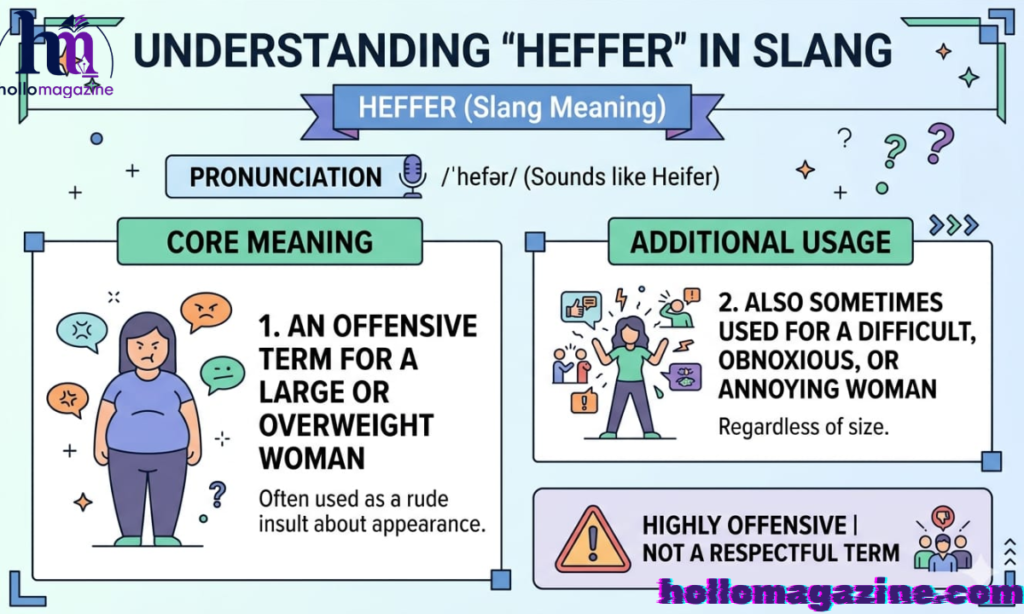
However, in slang usage, “heffer” is often used as an insulting term to describe a person, usually implying that someone is overweight or behaving in an undesirable way. Because of this, it is considered rude or offensive in many contexts.
Key meanings include:
- A misspelling of “heifer”
- Informal slang for a person (often insulting)
- Used to describe someone in a disrespectful way
- Common in online slang or casual speech
It is important to understand that this word is not appropriate in formal English.
Examples of Heffer
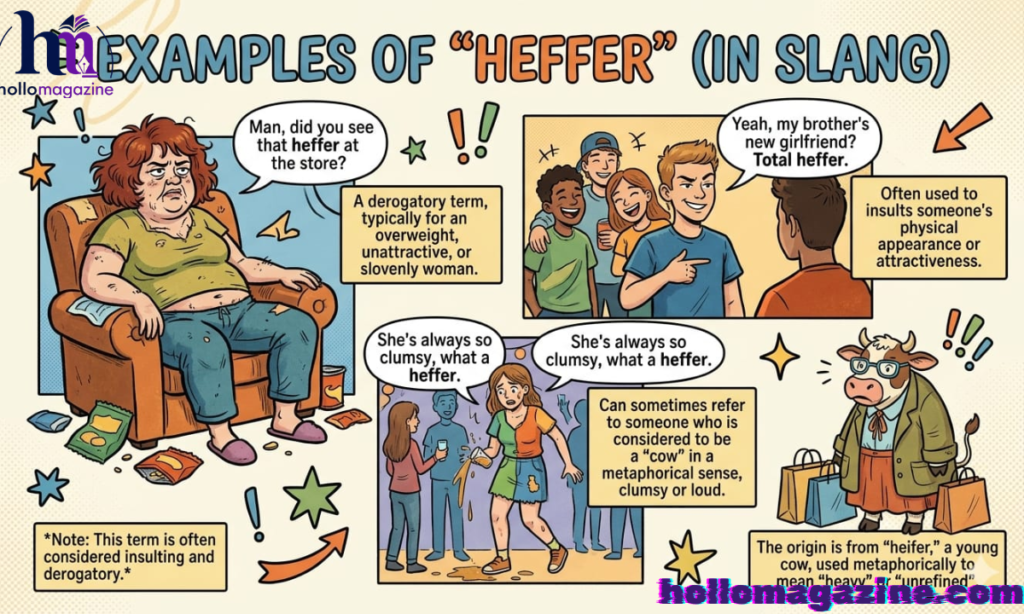
Because “heffer” is slang, it usually appears in informal or emotional contexts. It is not recommended for professional or academic writing.
Example sentences:
- He called her a heffer during the argument.
- That comment was unnecessary and offensive, using the word heffer.
- People online sometimes use “heffer” as an insult.
- She felt hurt after being called a heffer.
Context usage:
- Social media conversations
- Informal arguments
- Slang-heavy dialogue
- Online comment sections
Important note:
Using this word can easily be offensive, so context matters a lot.
Other Ways To Say Heffer
Since “heffer” is considered insulting slang, it is better to use neutral or polite alternatives depending on meaning.
Neutral alternatives:
- Overweight person (neutral, factual)
- Large-built person (descriptive, polite)
- Heavyset person (common descriptive term)
- Plus-size person (modern respectful term)
If referring to animals (original meaning):
- Heifer (correct spelling)
- Young cow
- Female calf (context-specific)
Polite communication tips:
- Avoid slang in formal writing
- Use respectful descriptions instead of insults
- Choose neutral vocabulary in professional settings
Origins Of Heffer
The word “heffer” comes from a variation of the word “heifer.” In traditional English, a heifer refers to a young female cow that has not yet given birth.
Over time, especially in informal speech and online culture, “heifer” was altered to “heffer,” and its meaning shifted in slang usage.
Historical development:
- Original word: Heifer (Old English livestock term)
- Agricultural meaning: Young female cow
- Slang transformation: Misspelling and phonetic change
- Modern usage: Informal insult in some contexts
Why the spelling changed:
- Fast typing on social media
- Regional pronunciation differences
- Internet slang evolution
- Memes and informal speech patterns
Important linguistic note:
This change shows how language evolves, especially in digital communication environments.
Read This: Coachs or Coaches? Understanding the Differences
Tone and Usage Warning
Because “heffer” is often used as an insult, it is considered:
- Informal
- Rude in many contexts
- Not suitable for professional writing
- Potentially offensive depending on tone
When NOT to use it:
- Academic writing
- Business communication
- Formal essays
- Professional emails
When it appears:
- Social media posts
- Informal conversations
- Online arguments
- Slang-based dialogue
Modern Internet Usage
In today’s online culture, slang spreads quickly, and words like “heffer” are often used in memes, jokes, or heated discussions. However, the meaning can vary depending on the context and tone.
Common online usage patterns:
- As an insult in arguments
- In humorous or exaggerated memes
- In casual storytelling
- In emotional expressions
Cultural Sensitivity
Language has emotional impact. Words like “heffer” can:
- Hurt feelings
- Create misunderstandings
- Escalate conflicts
For this reason, many speakers avoid such slang in respectful communication.
Summary Table
| Aspect | Meaning |
| Origin | From “heifer” (young cow) |
| Modern use | Slang insult |
| Tone | Offensive / informal |
| Acceptability | Not suitable for formal writing |
| Alternative words | Heavyset, plus-size, heifer (animal meaning) |
Practical Writing Tip
If you are writing or speaking in English:
- Always prefer respectful language
- Avoid slang that may offend
- Understand context before using informal words
conclusion
The word “heffer” is an informal slang term that originates from the word “heifer,” meaning a young female cow. Over time, it has developed a negative slang meaning in modern usage, often used as an insult in informal conversations. Because of its offensive tone, it is not recommended in formal or respectful communication.
Understanding words like “heffer” helps learners recognize slang, avoid misunderstandings, and choose better vocabulary in writing and speech. In most situations, using polite and neutral language is always the safer and more effective choice.
Frequently Asked Questions
What does heffer mean in slang?
In slang, “heffer” is often used as an insult referring to someone in a disrespectful way, though it originally comes from “heifer.”
Is heffer a real English word?
Yes, but the correct spelling is “heifer,” which refers to a young female cow.
Is heffer offensive?
Yes, in most contexts it is considered rude or insulting slang.
What is the correct spelling of heffer?
The correct spelling is “heifer.”
Can I use heffer in formal writing?
No, it is not appropriate for formal or academic writing.
Where is the word heffer commonly used?
It is mostly found in informal speech, social media, and slang conversations.

Rimsha creates simple grammar guides, English writing tips, and word meaning content for readers at Hollo Magazine.